
European RDS Guidelines 2025: What Actually Changed
The 2025 European RDS guidelines raise starting oxygen below 29 weeks, bring back surfactant prophylaxis, and put nasal ventilation ahead of CPAP.
The 2025 European RDS guidelines raise starting oxygen below 29 weeks, bring back surfactant prophylaxis, and put nasal ventilation ahead of CPAP.

CAKUT drives 40–50% of paediatric end-stage renal disease. A neonatal factsheet on reflux, obstruction, dysplasia and how to protect the nephrons you have.

Who to screen, when to feed and when to give IV glucose: the AAP’s practical approach to low glucose in late-preterm and term newborns.
The AAP 2022 jaundice guideline explained: higher phototherapy thresholds, follow-up based on distance from the threshold, and the new escalation-of-care step.
In very preterm babies, the first-day danger is low blood flow, not low blood pressure. Here’s how the immature heart, the duct and the brain interact.

Mean BP below gestation, under 30 mmHg or a low centile? None of these numbers predicts outcome. Confirm poor perfusion before you treat a reading.

Milrinone, the inodilator: strengthens the heart and unloads it at once. Where it shines (post-ligation syndrome, pulmonary hypertension) — and where it fails and harms.
Dopamine is the NICU’s default inotrope — reliable at raising blood pressure, but with no proven outcome benefit. Its dose ladder, hidden costs and the “renal-dose” myth.
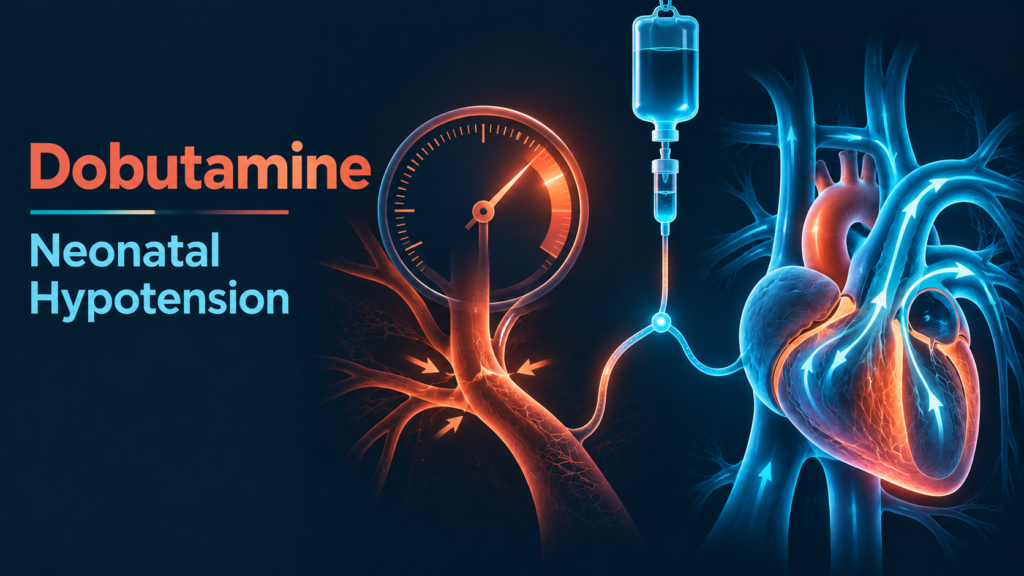
Dobutamine treats the pump, not the pressure gauge — the neonatal inotrope for myocardial dysfunction and high afterload. Why it improves flow even when it doesn’t lift blood pressure.

Hydrocortisone is the rescue for catecholamine-resistant neonatal hypotension — when adrenal insufficiency, not the heart or vessels, is the problem. Indications, dosing and the one interaction that matters.